Hydro Jetting vs. Snaking: Why Your Longmont Drain Keeps Clogging
If the same drain clogs again a few weeks after snaking, the method, not the effort, is the problem.
Snaking a clogged drain works, and it works quickly for most single-fixture clogs. The frustration starts when the same drain clogs again within weeks, sometimes despite being snaked more than once. That pattern usually means the method, not the technician, is the mismatch for what's actually going on inside the pipe.
What Snaking Actually Does
A drain snake is a flexible cable with a cutting or retrieving head, fed into the line to physically break through or pull out a blockage. It's fast, effective, and the right tool for most everyday clogs. What it doesn't do is clean the walls of the pipe along its full length. It punches a path through the middle of the clog and moves on.
What Hydro Jetting Actually Does
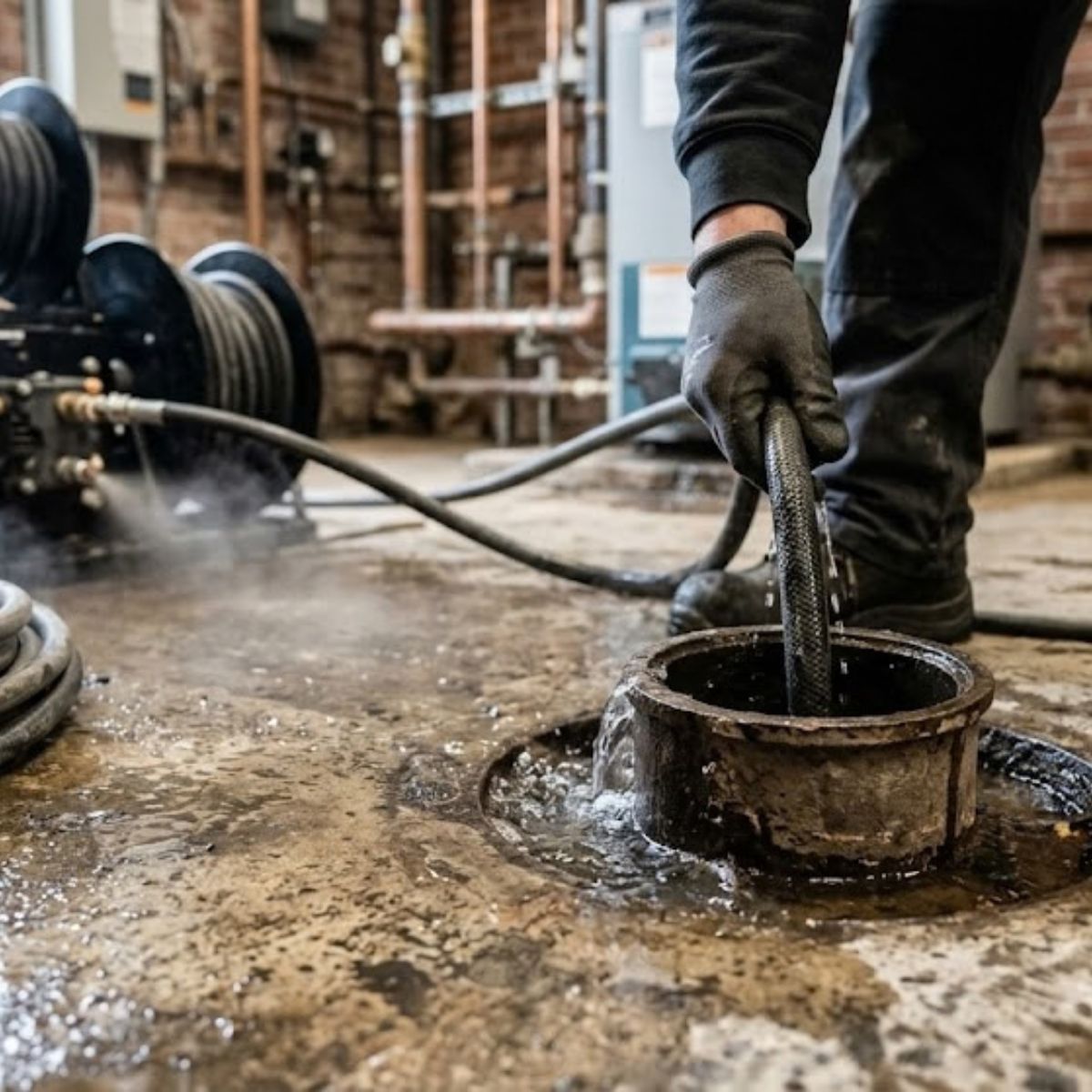
Hydro jetting uses a high-pressure water stream through a specialized nozzle to scour the full interior diameter of the pipe, not just clear a path through the center. Grease coating the pipe walls, scale buildup, and debris stuck to the sides all get removed, not just the material blocking the immediate flow.
Why This Difference Actually Matters
A drain that clogs again within a short span after snaking usually still has material coating the pipe walls, ready to catch new debris and rebuild the blockage. Jetting removes that coating entirely, which is why it holds up longer against recurring clogs even though it costs more than a standard snaking visit.
Why Longmont Drains See This Pattern Often
Documented local water hardness narrows the effective interior diameter of pipes over time through mineral scale, which gives grease and debris a rougher surface to stick to and less room to pass through. A line that would clear easily in a soft-water market has genuinely less margin here, which is part of why recurring clogs show up at real, higher rates locally.
When Snaking Is Still the Right Call
- A first-time clog with no history of recurrence on that fixture.
- A simple hair or debris blockage in a bathroom drain, which doesn't involve the grease-coating problem kitchen lines face.
- A quick, urgent fix needed immediately, with a jetting evaluation to follow if the clog returns.
When It's Time to Consider Jetting
- The same drain has clogged more than once despite being snaked.
- A kitchen line affected by ongoing grease buildup from regular cooking.
- A main sewer line clog that keeps recurring even after clearing.
- A camera inspection shows coating along the pipe walls, not just an isolated blockage.
What a Jetting Visit Actually Involves
A camera inspection typically comes first when jetting is being considered for a recurring problem, since jetting isn't the right tool for a pipe with a structural crack or a collapsed section. High-pressure water against already-compromised pipe risks making the damage worse rather than clearing it.
Once the line's condition is confirmed sound, the jetting hose is fed through with a nozzle matched to the pipe diameter and the specific type of buildup involved, whether that's grease, mineral scale, or root intrusion debris. The process scours the full circumference of the pipe rather than just the center, which is the entire point of choosing it over snaking for a recurring problem.
A Combined Approach Often Makes the Most Sense
For a genuinely recurring clog, pairing jetting with a follow-up camera inspection confirms the line is actually clear afterward rather than just assuming it based on restored flow. This is especially worth doing after root intrusion has been part of the clog history, since roots can be a symptom of a joint issue further down the line that jetting alone won't fix permanently.
Setting Realistic Expectations
Jetting is a genuinely effective maintenance and repair tool, but it isn't a permanent guarantee against future clogs, especially in a household that continues sending grease down a kitchen drain regularly. Combining a jetting service with a real change in habits, scraping grease into the trash rather than the sink, for instance, gets more value out of the service than jetting alone ever could.
Same drain, third time clogging?
Let's actually clear it this time, not just clear it again.
Frequently Asked Questions
Is hydro jetting safe for all pipe types?
It's safe for pipe confirmed to be in sound structural condition, which is why a camera inspection typically comes first on an older line before jetting is used.
How long does a jetted line typically stay clear?
Meaningfully longer than a snaked line in most cases, since the pipe walls themselves are cleaned rather than just the immediate blockage cleared.
Does jetting cost significantly more than snaking?
It costs more than a standard snaking visit, but often less over time than repeated snaking visits for the same recurring clog.
Can jetting be used on a bathroom sink or tub drain, not just a main line?
Yes, jetting equipment scales to smaller residential lines as well as main sewer lines, though a simple bathroom clog is often resolved with standard snaking first.
Will jetting damage older pipe that's still structurally sound?
No, jetting is a standard, safe method on pipe confirmed to be in sound condition. The concern only applies to pipe that's already cracked or otherwise compromised, which a prior camera check rules out.
How often should a main sewer line be jetted as routine maintenance?
Most homes don't need it on a fixed schedule. It's more commonly used reactively for a confirmed recurring problem than as a preventive routine on a line with no history of issues.
Does the type of clog affect which method works better?
Yes. Hair and simple debris respond well to snaking. Grease coating and mineral scale along the pipe walls respond better to jetting, since the underlying material is different from a single blockage point.