Tankless Water Heater Service in Longmont, CO
Tankless water heaters solve the hot-water-runs-out problem, but Longmont's hard water shortens their service life unless they're descaled on a schedule most homeowners never hear about.
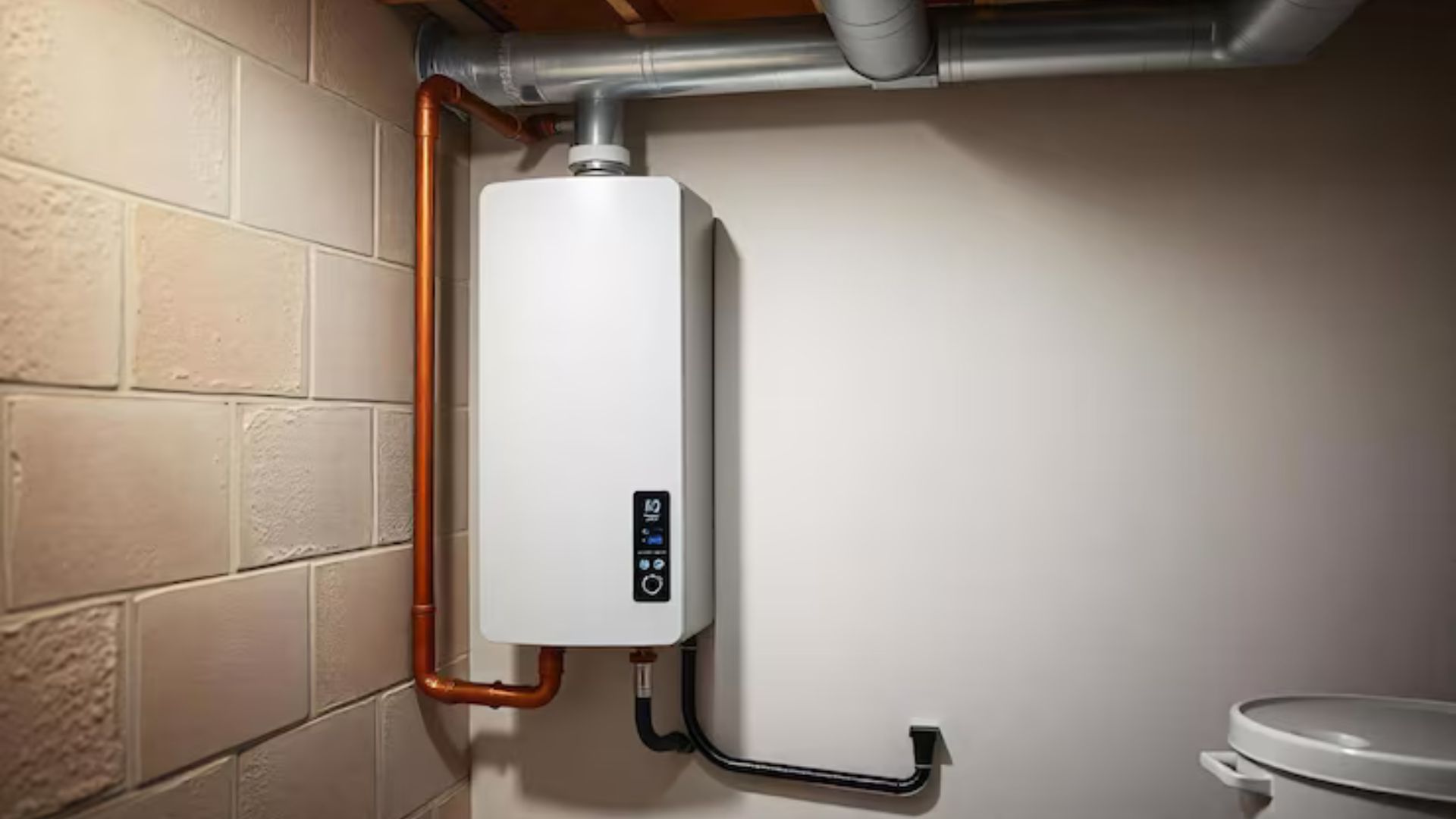
Longmont Apex Plumbing repairs, installs, and descales tankless water heaters throughout Longmont, Colorado. A tankless unit heats water on demand instead of storing it, which solves the classic problem of running out of hot water mid-shower, but it introduces a different maintenance need that a standard tank never had.
That need is descaling. The heat exchanger inside a tankless unit has narrow internal passages, and calcium and magnesium minerals in hard water build up on those surfaces every time the unit heats. Left alone, that buildup shows up first as reduced flow and inconsistent temperature, then eventually as full failure of the heat exchanger.
Water Temperature Swinging Hot and Cold, or Taking Longer to Warm Up?
Most calls about this don't start with the words tankless water heater. They start with water that runs lukewarm, a shower that takes noticeably longer to heat up than it used to, or a unit that shuts off mid-use and has to be reset. All three are common early signs of scale buildup inside a tankless unit's heat exchanger, and all three are the kind of thing that gets worse gradually enough that homeowners adjust around it instead of calling, until the unit fails outright.
Signs Your Tankless Water Heater Needs Service
- Water temperature fluctuates during a single shower instead of staying steady.
- Noticeably longer wait for hot water to reach the tap than when the unit was new.
- The unit displays an error code or shuts off partway through use.
- A rattling or popping sound from the unit when it fires up.
- Visible mineral scale or white residue around the unit's water connections.
Why Tankless Units Scale Up Faster in Longmont
Front Range municipal water, including Longmont's, carries enough dissolved calcium and magnesium to be classified as hard water, and a tankless unit's heat exchanger is exactly the kind of narrow, frequently heated surface that hard water scales fastest. A tank water heater has the same problem but more internal volume to absorb it before performance drops. A tankless unit has less room for that buildup before it affects flow and temperature.
A tankless unit installed without a water softener or a scheduled descaling plan in Longmont typically shows the first symptoms years earlier than the same unit would in a soft-water market, which is the main reason this service call comes in at real volume here.
How We Check a Tankless Unit
A service call starts with checking the unit's error history and flow sensor readings, since most tankless units log a fault code that narrows down whether the problem is scale, a failed igniter, a venting issue, or an electrical fault before any panel comes off.
If scale is the suspected cause, the fix is a descaling flush: isolation valves let us circulate a manufacturer-approved descaling solution through the heat exchanger with a flush pump, dissolving the mineral buildup without disassembling the unit. Manufacturers generally recommend this every 12 months in a hard-water market like Longmont, more often if a softener isn't installed.
Descale, Repair, or Replace?
- Descale flushThe right fix for reduced flow or temperature swings on a unit under about 6-8 years old with no other faults. Usually restores near-original performance.
- Component repairA failed igniter, flow sensor, or gas valve can often be replaced individually if the heat exchanger itself is still sound.
- Full replacementWorth considering when the heat exchanger has failed outright or the unit is old enough that parts are becoming hard to source, since a scaled heat exchanger that's already cracked can't be descaled back to working condition.
- Add a softenerThe most effective way to prevent this from recurring on a new or existing unit is treating the water hardness at the source rather than descaling reactively every year.
What Tankless Water Heater Service Costs
A descaling flush is a fixed-scope service and prices out differently than a repair or a full replacement, which depends on what's actually found.
- Unit conditionA first descale on a unit that's gone years without one takes longer than a unit on a regular annual schedule.
- AccessUnits mounted in a garage or utility closet are quicker to service than ones in a tight mechanical space.
- Repair vs. replaceA single failed component costs less than a full unit swap, which also involves venting and gas line reconnection.
- Fuel typeGas and electric tankless units use different parts and different labor time.
Free, no-obligation estimates are available for non-emergency work. Want your real number? Call (303) 552-3896.
Frequently Asked Questions
How often should a tankless water heater be descaled in Longmont?
Most manufacturers recommend annual descaling in a hard-water market. Longmont's documented water hardness makes annual service the safer default rather than waiting for symptoms.
Can I descale a tankless water heater myself?
Some homeowners do with a DIY kit, but it requires isolating the unit correctly and using a compatible solution. A professional flush also checks the flow sensor and error history at the same time, which a DIY kit doesn't.
Is it worth switching from a tank to a tankless water heater in Longmont?
It depends on hot water demand and whether you're willing to keep up with descaling. Tankless solves running-out-of-hot-water problems but needs more active maintenance here than a tank does.
Do you respond to tankless water heater failures at night or on weekends?
Yes. No-hot-water calls are handled as emergency dispatch, 24/7, in Longmont and the surrounding service area.