
Sewer Line Repair vs. Replacement: How to Decide
The honest answer depends entirely on what a camera actually shows, not on which option sounds safer.
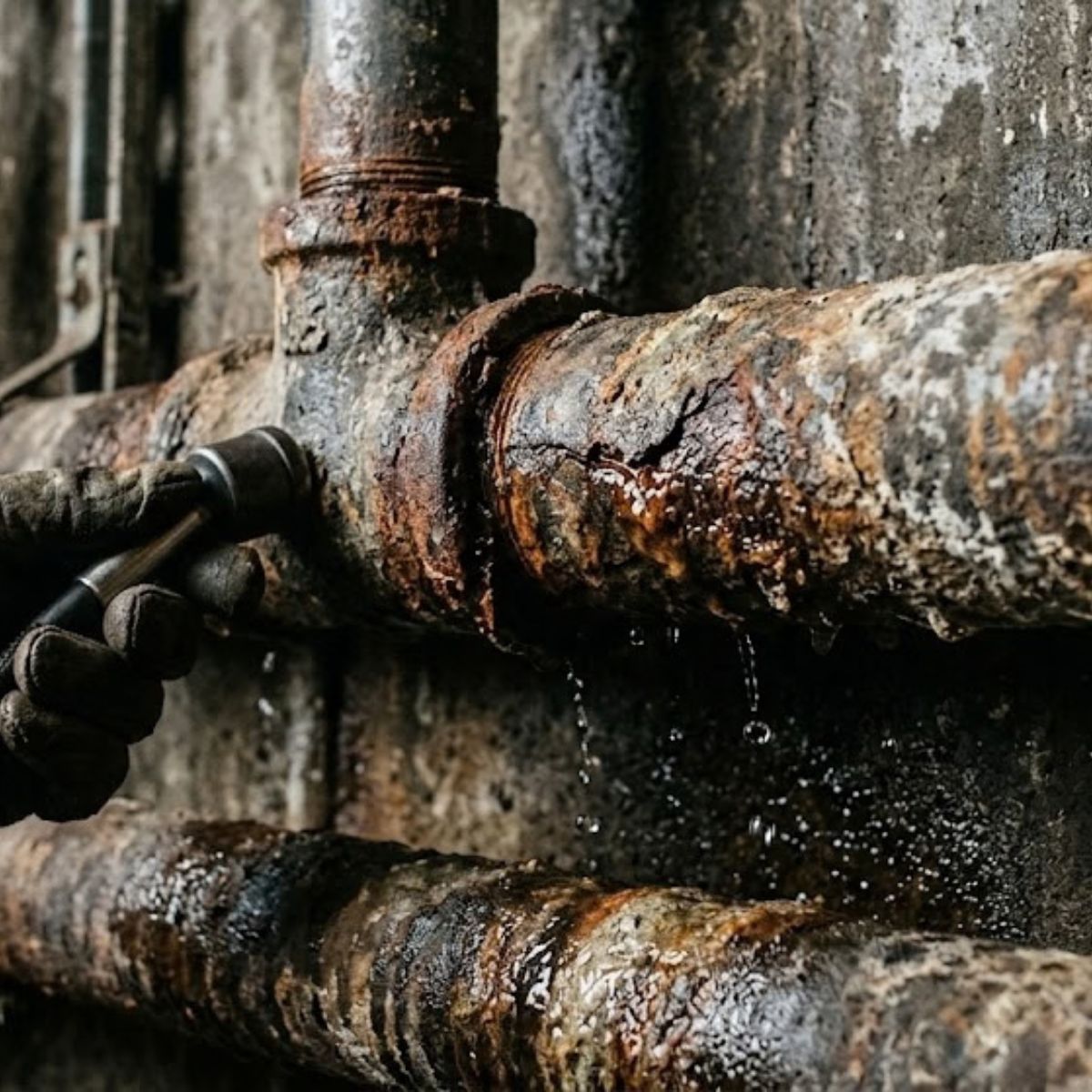
Nobody wants to hear their sewer line needs work, and the natural next question is whether that means a contained, affordable repair or a much larger replacement project. The honest answer is that it depends entirely on what a camera inspection actually finds, not on guesswork or which option sounds safer to ask for.
Why This Decision Can't Be Made From Symptoms Alone
A backed-up drain, a gurgling toilet, or a sewage smell in the yard all point toward a sewer line problem, but none of them tell you how extensive the damage actually is. A single cracked joint and a line with root intrusion at five separate points can produce nearly identical symptoms from inside the house, which is exactly why a camera inspection, not a guess based on symptoms, is the honest starting point for this decision.
What Points Toward Repair
- A single, isolated crack or joint failure, with the rest of the line showing sound condition on camera.
- Root intrusion at one specific point, without evidence of broader root activity along the line's length.
- A relatively young line (installed within the last few decades) with an isolated defect rather than widespread wear.
- A camera-confirmed problem that doesn't extend across multiple sections.
In these situations, a spot repair, digging up and replacing just the damaged section, or trenchless lining of that specific area, resolves the problem without the cost and disruption of replacing the whole line.
What Points Toward Replacement
- Multiple damaged sections or root intrusion points found along the same line.
- A collapsed or severely bellied section that traps waste permanently rather than allowing normal flow.
- Original clay, cast iron, or galvanized pipe old enough that the material itself is degrading broadly, not just at one weak point.
- A pattern of recurring problems even after a prior spot repair.
In these cases, a large repair often just relocates the next failure to an adjacent section of the same aging line. Full replacement, while more expensive up front, tends to be the more cost-effective choice over time when the damage is genuinely this widespread.
Why Longmont's Clay Soil Makes This More Common
Expansive clay soil, common across the Front Range, swells and shrinks with seasonal moisture changes, and that movement puts ongoing stress on buried lines at their joints specifically. A line that's old enough to be brittle takes that stress at multiple points simultaneously, which is a real, physical reason older Longmont sewer lines more often show damage in more than one spot rather than a single clean failure.
A Comparison at a Glance
| Factor | Repair Usually Fits | Replacement Usually Fits |
|---|---|---|
| Damage extent | One isolated section | Multiple sections or full-length degradation |
| Pipe material/age | Younger line, isolated defect | Old clay, cast iron, or galvanized throughout |
| Root intrusion | Single point, contained | Recurring or widespread along the line |
| Prior repairs | First issue on this line | Repeat failures after a previous repair |
This table is a starting frame, not a substitute for the actual camera footage. Two homes with the same symptom can land on opposite sides of this table depending entirely on what the camera shows, which is why the inspection itself, not the symptom, is the thing worth insisting on before agreeing to either option.
A Realistic Example
Two Longmont homes both call about a backed-up main line. In the first, the camera shows a single crack about 15 feet from the house, likely caused by a tree root that found a weak joint. The rest of the line, checked its full length, is clear and sound. That's a spot repair: excavate that one section, replace it, and the line is back to full function.
In the second home, the camera shows root intrusion at three separate points along an aging clay line, plus a section that's visibly bellied and holding standing water even between uses. That's a different situation entirely. A spot repair on one of the three problem areas would leave the other two to fail on their own timeline, likely within a year or two, which means paying for the excavation and disruption twice, or more, instead of once. Full replacement, while a bigger project up front, is the honest recommendation here.
Both homes called with the same symptom. The camera, not the symptom, is what actually told them apart.
What This Actually Costs, Honestly
A spot repair is priced around the excavation depth, the length of pipe actually replaced, and any surface restoration needed above it, such as patching a lawn or a section of driveway. It's a contained, predictable cost precisely because the scope is small.
Full replacement costs more, scaling with the total line length, the depth, and whether trenchless methods can be used instead of a full open trench. Trenchless pipe bursting often costs less than traditional excavation for a full line, though it isn't always possible depending on the specific site's soil, existing utilities, and the line's path.
The honest range for either option is wide enough that a phone quote before the camera inspection is close to meaningless. The real number only exists after the actual condition is known, which is the whole point of insisting on the inspection first.
Not sure which side of this your sewer line falls on?
A camera inspection gives you the real answer before you commit to either option.
Frequently Asked Questions
Can I just ask for a repair instead of a replacement to save money?
You can, but if the underlying line is broadly degraded, a repair may not hold, and you'd end up paying for both the repair and the eventual replacement. An honest camera-based assessment avoids that outcome.
How long does a camera inspection take?
Most residential inspections are completed within a single visit.
Does insurance typically cover sewer line replacement?
It varies significantly by policy and cause, so checking with your specific insurer about your specific situation is worth doing before assuming either way.