
Slab Leaks in Colorado: Why Front Range Clay Soil Makes Them More Common
It's not bad luck or bad pipe. It's the ground itself moving under the slab, year after year.
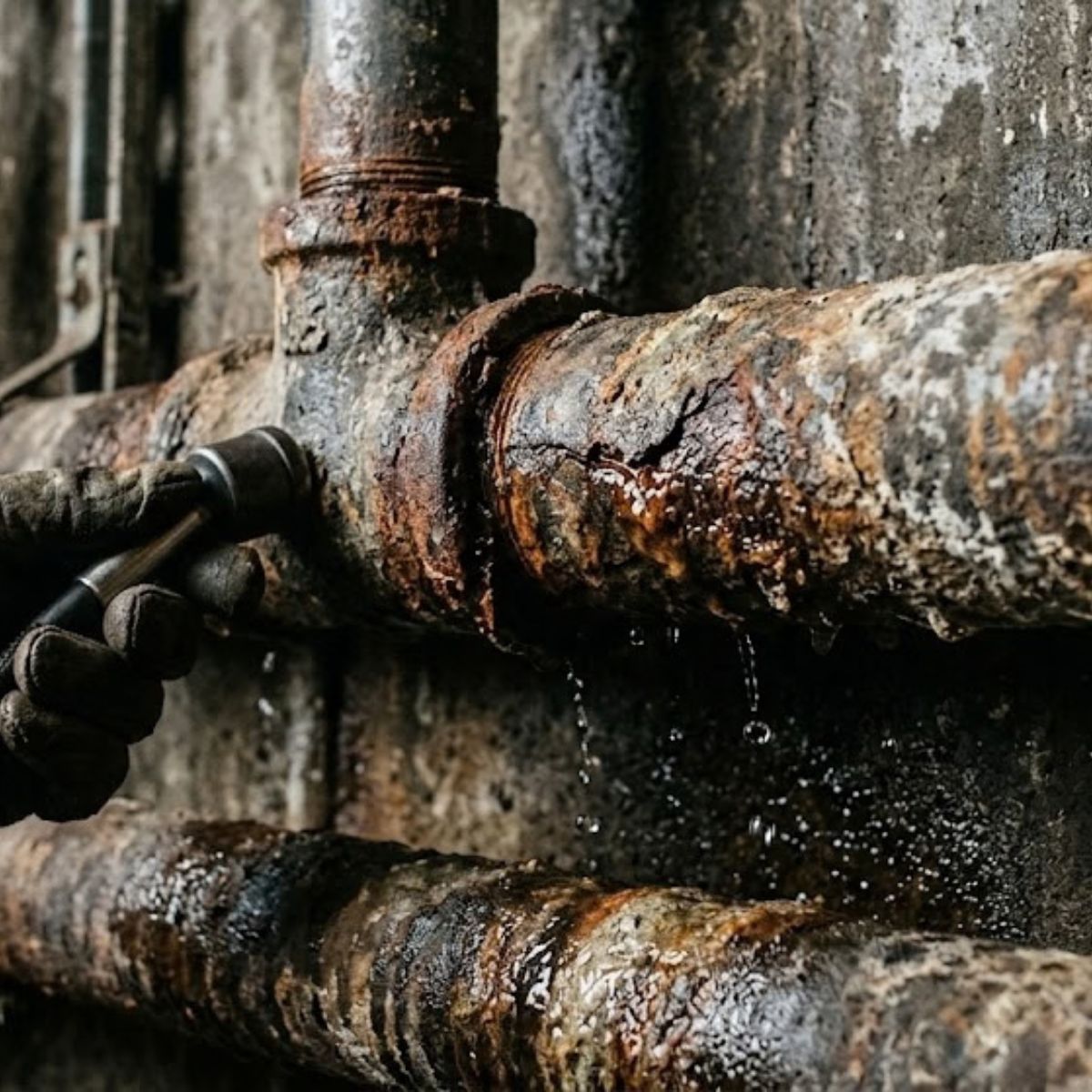
A slab leak feels like bad luck when it happens: a warm spot on the floor, a mysteriously rising water bill, or the faint sound of running water with everything shut off. The real cause, in most Front Range cases, isn't luck at all. It's the ground itself, moving beneath the slab in a way that most homeowners never think about until it causes a problem.
What Expansive Clay Soil Actually Does
Expansive clay soil, common across the Front Range including the Longmont area, absorbs moisture and swells, then dries out and shrinks, on a seasonal cycle tied to precipitation and temperature. That swelling and shrinking isn't dramatic on any single day, but it's a real, repeated mechanical force acting on anything buried in or resting on that soil, including the concrete slab foundation of a house and the water lines running beneath it.
A water line under a slab, typically copper in older construction, sits directly in the path of that movement. Over years, the repeated stress concentrates at the line's joints and fittings, the weakest points in an otherwise continuous run of pipe, which is exactly where slab leaks tend to actually develop.
Why This Is a Front Range Issue Specifically
Not all soil behaves this way. Sandy or well-draining soil doesn't hold onto moisture the same way, so it doesn't swell and shrink nearly as dramatically. The clay-heavy soil common across Boulder and Weld County is a genuinely different geological situation, and it's part of why slab leaks show up here at a real, higher rate than they would in a market with more stable ground.
The Age Factor Compounds It
A newer copper installation has more flexibility left in the metal to absorb small amounts of ground movement without failing. An older line that's already been through decades of the same seasonal cycle has less give left, which is why slab leaks skew toward older Longmont homes even though the clay soil itself affects every property in the area equally.
What Homeowners Can Actually Do About This
You can't change the soil under your house, and re-grading or soil stabilization is a much larger and more expensive undertaking than anything most homeowners consider for this specific issue alone. What you can control is catching a developing leak early, before it causes real flooring or foundation-adjacent damage.
- Pay attention to warm spots on flooring, especially over where a hot water line is known or suspected to run.
- Take a rising water bill with no other explanation seriously rather than assuming it's a billing error.
- If your home is older with original copper lines under the slab, consider a proactive leak detection check even without an active symptom.
- Don't ignore a slight, persistent sound of water when everything is shut off, even if it seems faint.
Detection Doesn't Mean Guessing
Modern leak detection for a suspected slab leak uses acoustic equipment placed directly on the floor to listen for the specific sound of water escaping a pressurized line, along with thermal imaging for a hot water line specifically. Neither method requires breaking through the slab just to find the leak. Actually reaching it for repair is a separate decision, made once the location is confirmed.
Once It's Found: The Real Options
Finding the leak precisely is what opens up real choices for fixing it. Tunneling beneath the slab from an accessible exterior point can reach the pipe without breaking through the floor at all, which is often the least disruptive option when the site allows for it.
Breaking through the slab directly is sometimes the more practical route when tunneling isn't feasible, followed by patching the concrete once the repair is complete. A third option, rerouting the line overhead through walls or an attic space instead of repairing the under-slab section at all, avoids slab access entirely and is worth discussing honestly as an alternative rather than assuming slab access is the only path.
This Isn't Unique to Longmont
Homes across the wider Front Range corridor, from Boulder through Fort Collins and down toward Denver, sit on variations of the same expansive clay soil, which means this isn't a Longmont-specific quirk so much as a genuine regional characteristic. If you've owned a home elsewhere along this corridor and dealt with a slab leak there, the underlying cause was very likely the same soil behavior at work.
Warm spot on the floor, or a water bill that doesn't add up?
We can confirm whether it's a slab leak before anything gets opened up.
Frequently Asked Questions
Can I prevent a slab leak entirely?
Not the underlying soil movement itself, but catching a leak early through attention to the real warning signs limits the damage significantly compared to letting it run undetected.
Does homeowners insurance cover slab leak repair?
Coverage varies by policy, particularly around the distinction between the pipe repair itself and any resulting damage, so checking with your specific insurer is worth doing.
Is PEX under a slab less prone to this than copper?
PEX has more inherent flexibility than copper, which can help, though a properly installed line of either material can still be affected by significant, sustained ground movement over time.
How urgent is a confirmed slab leak, really?
It's worth addressing promptly rather than treating it as optional, since ongoing water loss under a slab can affect flooring and, left long enough, contribute to soil movement issues beneath the foundation itself.
Can a slab leak affect my home's foundation over time?
Prolonged, unaddressed water escaping under a slab can contribute to soil erosion or shifting beneath the foundation, which is part of why catching it early matters beyond just the water bill.