
Tankless vs. Tank Water Heaters: What Actually Makes Sense in Longmont
The usual comparison misses the one factor that changes the math here: water hardness.
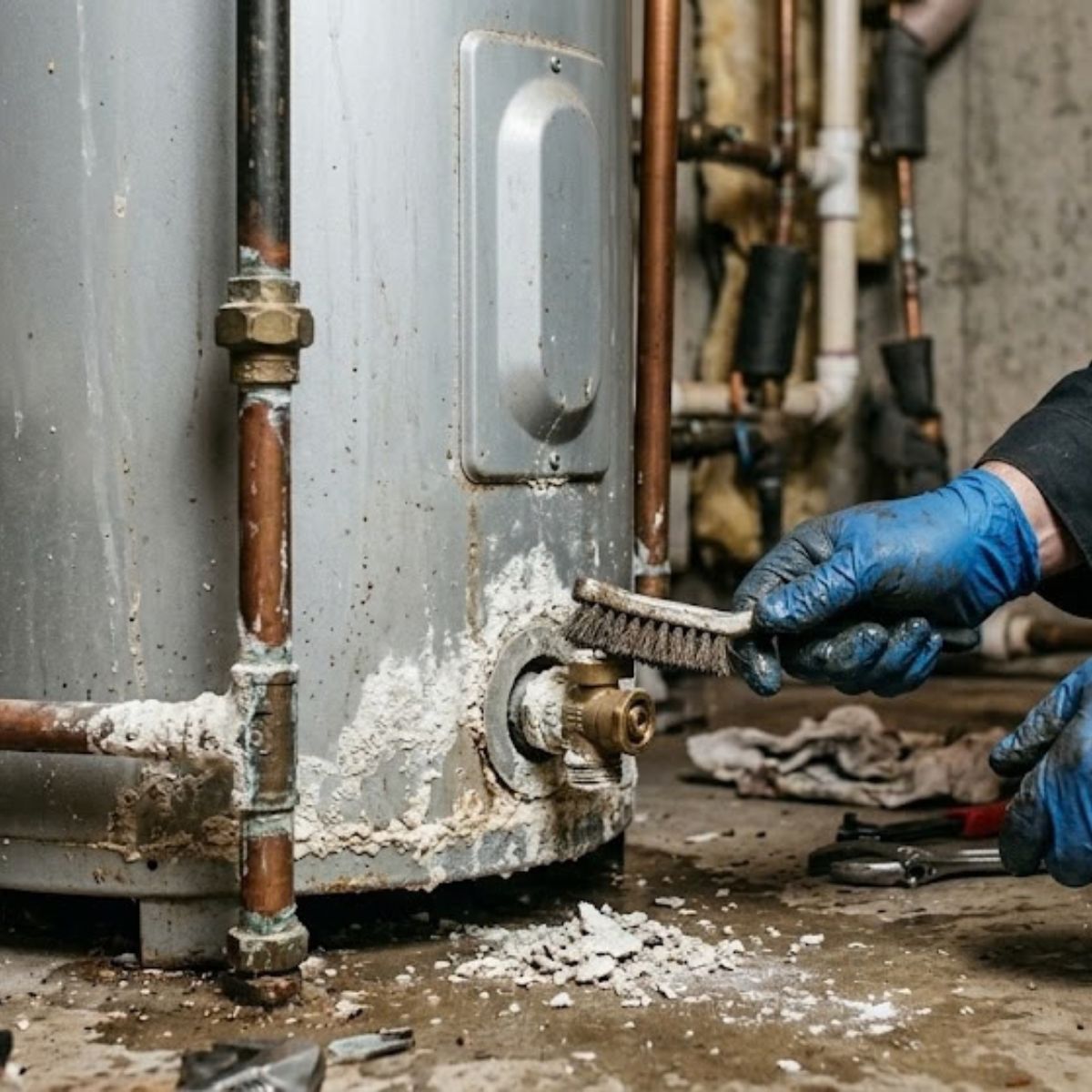
Most tankless-versus-tank comparisons online focus on upfront cost, energy efficiency, and available space, which are all real considerations. What they usually leave out is the one factor that changes the practical math specifically in a hard-water market like Longmont: how much maintenance each option actually needs to keep performing.
The Standard Trade-offs, Briefly
A tankless unit heats water on demand, which means genuinely endless hot water and a smaller physical footprint than a large storage tank. It typically costs more upfront, both for the unit itself and installation, since some homes need venting or gas line changes to support it.
A standard tank unit costs less upfront, installs more simply in most cases, and is a familiar, well-understood technology. Its real limitation is finite hot water storage. Run the tank dry during a long shower or back-to-back loads of laundry, and everyone after that is waiting for it to reheat.
The Factor That Actually Changes in Longmont
Documented Front Range water hardness affects both options, but not equally. A tank unit has real internal volume to absorb scale buildup before performance drops noticeably, which is part of why a scaled tank can keep working, just less efficiently, for years before it becomes an obvious problem.
A tankless unit's heat exchanger has narrow internal passages built for fast, efficient heating, and those same narrow passages are exactly where scale accumulates fastest. Without annual descaling, a tankless unit here can show real performance problems, inconsistent temperature or reduced flow, within just a few years.
That's not a reason to avoid tankless. It's a reason to budget for the maintenance it actually needs here, the same way you'd budget for a specific climate's effect on a car battery or a roof.
A More Complete Comparison
| Factor | Tank | Tankless |
|---|---|---|
| Upfront cost | Lower | Higher |
| Hot water supply | Limited by tank size | Effectively endless |
| Footprint | Larger | Smaller, wall-mounted |
| Longmont-specific maintenance | Occasional flush recommended | Annual descaling genuinely needed |
| Failure mode without maintenance | Gradual efficiency loss | Noticeable performance drop, sooner |
Who Tankless Actually Fits Best Here
Tankless makes the most sense for a household that genuinely runs out of hot water regularly on a tank system, and that's willing to keep up with annual descaling as a real, non-optional maintenance item rather than an occasional nice-to-have. Pairing a tankless install with a whole-home water softener is the single most effective way to extend its working life here, since it addresses the scale problem before the water ever reaches the unit.
Who a Tank Still Fits Best
A standard tank remains a reasonable, lower-maintenance choice for a smaller household with predictable hot water use, or for anyone who wants to avoid an annual service commitment. A tank on a regular flush schedule, or paired with a softener, still holds up reasonably well here without the same urgency around maintenance.
The Honest Bottom Line
Neither option is objectively better in Longmont specifically. The real decision comes down to whether you would rather pay more upfront and commit to real annual maintenance for endless hot water, or pay less upfront and accept a finite supply with lower ongoing attention required. Both are legitimate choices once the actual local trade-off is on the table.
A Question Worth Asking Before Either Choice
Before deciding, it's worth honestly assessing your household's actual hot water pattern over a typical week, not just a worst-case scenario. A household that occasionally runs short on hot water once a month during an unusually busy day is a different situation than one running out multiple times a week. The first might be solved by adjusting habits or a modest tank upgrade, while the second is a genuine case for tankless.
It's also worth factoring in how long you plan to stay in the home. The higher upfront cost of tankless amortizes better over a longer ownership horizon, while a household planning to move within a few years may not recoup that difference through energy savings alone.
What This Means for a Failed Water Heater Right Now
If you're facing this decision because your current unit just failed rather than as planned research, the honest answer is that a like-for-like replacement is usually the fastest path back to hot water. A conversion to the other type is a separate, less time-pressured decision worth revisiting once the immediate emergency is resolved.
Weighing tankless against a tank replacement?
We'll size either option honestly for your household's actual hot water use.
Frequently Asked Questions
Is tankless worth the extra cost in a hard-water area?
It can be, if you're willing to keep up with annual descaling. Skipping that maintenance is what causes most of the early tankless failures we see here.
Can I install a water softener with either type?
Yes, and it's one of the most effective things you can do to extend the life of either a tank or tankless unit in Longmont specifically.
How much does annual tankless descaling typically cost?
It's a modest, predictable service cost, well below the cost of a premature heat exchanger replacement or full unit failure.
Can an existing tank water heater be converted to tankless later?
Yes, though it's a real installation project involving venting and sometimes gas line changes, not a simple swap. It's worth planning as its own decision rather than assuming it's a minor upgrade.
Do both types need the same amount of space?
No, a tankless unit's smaller, wall-mounted footprint is one of its real advantages in a home with limited utility space, compared to a standard tank's larger physical size.
Is a hybrid heat pump water heater a third option worth considering?
For some households, yes. It uses less energy than standard electric resistance heating, though it needs adequate space and airflow to work efficiently, which isn't the right fit for every mechanical room.